
Bobines d’allumage

Pour activer les bougies, des tensions élevées sont nécessaires. Les bobines d’allumage de DENSO assurent la livraison constante, et fiable de sorties de haute puissance à chaque fois.

Bobines d’allumage

How DENSO ignition coils work

Every time you turn the key, a spark needs to be delivered to trigger the ignition of the engine. To deliver this, the ignition coil needs to convert the lower power output of the car battery into the high voltages needed to enable the spark plug to fire. To help an engine perform reliably and efficiently, the ignition coil needs to create a strong power output within milliseconds. It does this by combining the effects of electricity and magnetism.

As an electrical current of around 12 volts passes from the car battery through the ignition coil (which is made up of an iron core, primary and secondary coils) a magnetic field is created around the primary coil. When the spark plug requires a spark to be made, the ignition system stops the flow of electricity into the primary coil. The magnetic field around the primary coil then collapses, increasing the voltage produced to around 200 volts. The secondary coil has around 100 times more coils than the primary one, so when the magnetic field collapses here, a voltage that’s 100 times greater is produced - around 20,000 volts.

This process - known as mutual inductance - is what causes the transformer action within the ignition coil. This produces the high voltages needed to create a spark within the spark plug, igniting the air/fuel mixture.

Rd W Fud Glz YX Rpb24i On Ryd W Us Im92 ZX Jza G9vd E Rlcmlu Z2lu Zy I

Features and benefits of DENSO ignition coils

  • An innovative, cylindrical design makes the most of small engine sizes.
  • Increased magnetic efficiency produces high voltages faster.
  • The use of superior materials increases reliability and reduces misfires.
  • no high-tension ignition wires needed, enabling faster installation.
Compact, innovative design
Our market-leading design integrates the driving circuit into the top of our ignition coils, reducing product size. This means DENSO ignition coils can be installed easily into smaller engines and make the most of engine ‘dead space’.
Superior performance
By combining our advanced design with high-quality materials, we ensure that our ignition coils produce magnetic efficiency and generate higher voltages faster for a longer lifetime.
Easier installation
With no need to include high tension ignition wires, our ignition coil’s integrated and compact design makes it easier to install, even in smaller engines.

Types and characteristics

Working in partnership with some of the world’s leading car manufacturers, we’ve produced ignition coil products that provide exactly what OE car makers need; reliability, easy installation and optimum performance.

Bobines d’allumage les types

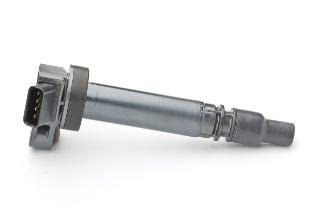
Bobine de bâton

Une première sur le marché, notre bobine d’allumage compacte de type bâton a été le pionnier d’une conception, qui offre des performances supérieures dans un produit plus petit et facile à installer.

Stick colil
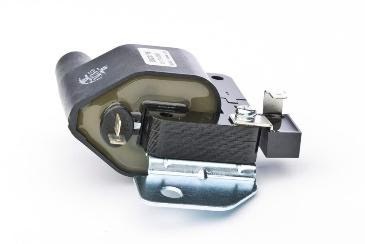
Bobine du distributeur

Un système de distribution utilise un arbre rotatif, qui achemine le courant haute tension vers les bougies d’allumage dans le bon ordre. Les progrès technologiques, ont conduit à remplacer les distributeurs mécaniques traditionnels, par des distributeurs électroniques.

Distribuition coil
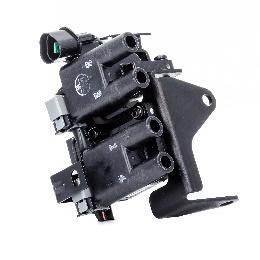
Bloc de bobine d’allumage

Ce système d’allumage sans distributeur combine plusieurs bobines, dans une seule unité. Avec plusieurs prises pour alimenter en même temps les différentes bougies d’allumage.

Ignition colil block
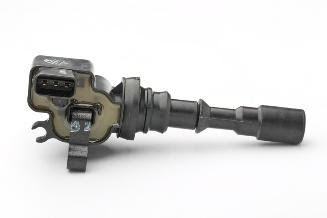
Bobine sur fiche

Une autre conception pionnière, nos produits à bobine sur fiche fournissent une double étincelle dans un système sans distributeur, ce qui en fait une excellente option pour les modèles de voitures de grande puissance.

Coil on plug

Characteristics

Our design is unique to DENSO and has been developed alongside world-leading manufacturers. With micro-sized driver circuits and diagonal inductive windings, our ignition coils deliver high power outputs in a compact design.

Installation and fault finding

Designed to suit a range of engine sizes, it’s essential that you install ignition coils suitable for your application safely and correctly to ensure optimum performance. Finding and addressing faults quickly will ensure this performance is delivered for a lifetime.

Installation

To get optimum performance from your ignition coil, ensure you install it effectively and efficiently:

1. Disconnect the connector from the faulty ignition coil. Remove the screw(s) and faulty ignition coil.

2. Install the new ignition coil into the plug hole of the cylinder head in the same orientation as the original. This will help to secure the connection to the spark plug terminal. Install the screw and connector. Turn the engine on and check if the ignition system works properly.

  • Always disconnect the cable from the negative (-) battery terminal before replacing the ignition coil and wait at least 90 seconds to prevent any type of activation. After your replacement, connect the cable to the negative (-) battery terminal.
  • Pay extra attention when connecting the ignition coil to the spark plug. Misalignment can cause severe spark plug damage and increases the probability of external particles such as dust/debris/water to enter. The fitment should be airtight.

Fault finding

Finding faults quickly will ensure an ignition coil has a longer life:
  • No combustion: no combustion occurs because no spark is emitted.
  • Stalling: engine stalls but can be restarted.
  • Poor drivability: hesitation during acceleration or the engine misfires.
  • The Diagnostic Trouble Code (DTC) engine warning light will probably be turned on, indicating an ignition error. However, this might be caused by another system problem. A visual check should therefore be performed first. Check for any mechanical damage, such as cracks and carbon tracks on the ignition coil body, any corroded or worn plugs and cables in the wiring, any loss in battery power to the ignition system, and any oil or water contamination.
  • If an ignition coil is identified as defective, the root cause should be determined with care, to avoid the replacement ignition coil failing just like the original ignition coil. The vehicle manufacturer’s ignition system instructions should always be referred to in the first instance